At The Temple Gates
0
0
As an Amazon Associate and affiliate partner, Menrva Books earns from qualifying purchases. Learn more
Author Description
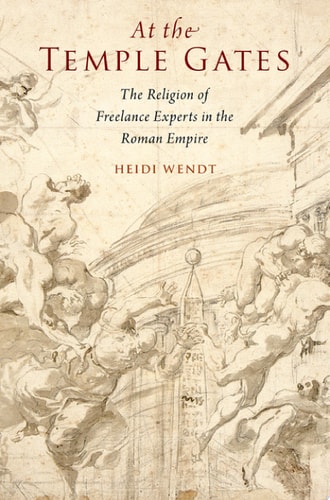
In His Sixth Satire, Juvenal Speculates About How Roman Wives Busy Themselves While Their Husbands Are Away, Namely, By Entertaining A Revolving Door Of Exotic Visitors Who Include A Eunuch Of The Eastern Goddess Bellona, An Impersonator Of Egyptian Anubis, A Judean Priestess, And Chaldean Astrologers. From These Self-proclaimed Religious Specialists Women Solicit Services Ranging From Dream Interpretation To The Coercion Of Lovers. Juvenal's Catalogue Suggests The Popularity Of Such Freelance Experts At The Turn Of The Second Century And Their Familiarity To His Audience, Whom He Could Expect To Get The Joke. Heidi Wendt Investigates The Backdrop Of This Enthusiasm For The Religion Of Freelance Experts By Examining Their Rise During The First Two Centuries Of The Roman Empire. Unlike Civic Priests And Temple Personnel, Freelance Experts Had To Generate Their Own Authority And Legitimacy, Often Through Demonstrations Of Skill And Learning In The Streets, In Marketplaces, And At The Temple Gates, Among Other Locations In The Roman World. Wendt Argues That These Professionals Participated In A Highly Competitive Form Of Religious Activity That Intersected With Multiple Areas Of Specialty, Particularly Philosophy And Medicine. Over The Course Of The Imperial Period Freelance Experts Grew Increasingly Influential, More Diverse With Respect To Their Skills And Methods, And More Assorted In The Ethnic Coding Of Their Practices. Wendt Argues That This Context Engendered Many Of The Innovative Forms Of Religion That Flourished In The Second And Third Centuries, Including Phenomena Linked With Persian Mithras, The Egyptian Gods, And The Judean Christ. The Evidence For Freelance Experts In Religion Is Abundant, But Scholars Of Ancient Mediterranean Religion Have Only Recently Begun To Appreciate Their Impact On The Empire's Changing Religious Landscape. At The Temple Gates Integrates Studies Of Judaism, Christianity, Mystery Cults, Astrology, Magic, And Philosophy To Paint A
Menrva's Summary
THE THESIS
How did freelance religious experts in the Roman Empire establish authority and influence outside of traditional civic and temple structures? Heidi Wendt, a scholar of ancient Mediterranean religions, utilizes a wide array of historical evidence to analyze the rise of independent religious practitioners during the first two centuries of the Roman Empire. She argues that these individuals, ranging from astrologers to healers, operated in a competitive marketplace where they had to actively construct their legitimacy through demonstrations of skill and specialized knowledge. This framework positions these figures as central, rather than peripheral, actors in the evolution of the Roman religious landscape.
THE SCOPE MAP
What You Will Find
- Analysis of the competitive religious marketplace in the Roman Empire.
- Examination of the intersection between religious practice, philosophy, and medicine.
- Historical investigation into the origins of diverse religious phenomena including Mithraism and early Christianity.
Scope Limits
- The study focuses primarily on the first two centuries of the Roman Empire.
- The analysis does not cover the institutionalized civic priesthoods or state-sanctioned temple personnel in depth.
THE AUTHORITY PERSPECTIVE
Scholars recognize this work as a significant contribution to the study of ancient Mediterranean religious history, particularly for its focus on the agency of non-elite practitioners. Readers frequently note the academic rigor of the text and its success in integrating disparate fields such as magic, philosophy, and early Christian studies.
Page Count:
336
Publication Date:
2016-01-01
Publisher:
Oxford University Press
ISBN-10:
0190267151
ISBN-13:
9780190267155
Religion
History
Cultural History
Sociology
Ancient - Rome