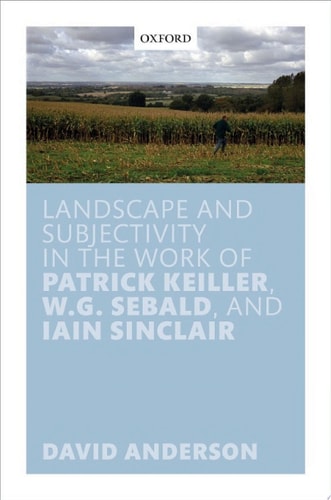
Landscape and Subjectivity in the Work of Patrick Keiller, W.G. Sebald, and Iain Sinclair
0
0
As an Amazon Associate and affiliate partner, Menrva Books earns from qualifying purchases. Learn more
Author Description
This book situates the film-maker Patrick Keiller alongside the writers W.G. Sebald and Iain Sinclair as the three leading voices in 'English psychogeography', offering new insights to key works including London, The Rings of Saturn, and Lights Out for the Territory. Excavating social and political contexts while also providing plentiful close analysis, it examines the cultivation of a distinctive 'affective' mode or sensibility especially attuned to the cultural anxieties of the twentieth century's closing decades. Landscape and Subjectivity explores motifs including essayism, the reconciliation of creativity with market forces, and the foregrounding of an often agonised or melancholic. It asks whether the work can, collectively, be seen to constitute a 'critical theory of contemporary space' and suggests that Keiller, Sebald, and Sinclair's contributions represent a highly significant moment in English culture's engagement with landscape, environment, and itself. The book's analyses are fuelled by archival and topographical research and are responsive to various interdisciplinary contexts, including the tradition of the 'English Journey', the set of ideas associated with the 'spatial turn', critical theory, the so-called 'heritage debate', and more recent theorisation of the 'anthropocene'.
Menrva's Summary
THE THESIS
This book investigates whether the collective works of Patrick Keiller, W.G. Sebald, and Iain Sinclair constitute a critical theory of contemporary space. David Anderson, drawing on archival and topographical research, examines how these three figures articulate a specific affective sensibility in response to the cultural anxieties of the late twentieth century. By situating their output within the tradition of the English Journey and the spatial turn, the author argues that their work represents a significant moment in the cultural engagement with landscape and environment.
THE SCOPE MAP
What You Will Find
- Analysis of key works including London, The Rings of Saturn, and Lights Out for the Territory
- Exploration of the essayistic mode and the reconciliation of creativity with market forces
- Integration of critical theory, the heritage debate, and anthropocene discourse
Scope Limits
- The study is restricted to the specific psychogeographical contributions of Keiller, Sebald, and Sinclair
- It does not provide a comprehensive history of English landscape literature beyond the twentieth-century context
THE AUTHORITY PERSPECTIVE
Scholars and critics recognize this text as a rigorous interdisciplinary examination of the psychogeographical movement in English culture. Readers frequently note the academic density of the prose and the depth of the author's engagement with both topographical and theoretical frameworks.
Page Count:
311
Publication Date:
2020-01-01
Publisher:
OUP Oxford
ISBN-10:
0192586475
ISBN-13:
9780192586476
History
Literary Criticism
Film Studies
Geography
Indigenous
British literature
Community Tags
Similar Books